
Transcranial Magnetic Stimulation (TMS)
Rebuilding the Brain's Interconnected Networks
The Brain Is Built for Connection. And Change.
Transcranial magnetic stimulation is a noninvasive approach to influencing brain activity and neuroplasticity
Think about dropping a pebble into still water. The impact happens in one small spot, but the ripples spread far beyond that point. The brain works in a similar way. It is an incredibilty interconnected system.
Transcranial Magnetic Stimulation (TMS) uses magnetic pulses to stimulate nerve cells in targeted areas of the brain. Because these cells communicate with other regions, stimulating one area can influence activity throughout connected brain networks.
The prefrontal cortex is often called the brain's executive control center. It helps us focus, plan, remember information, manage emotions, and make decisions. But it doesn't work alone. It's connected to many other areas of the brain through an extensive network of nerve pathways. When we stimulate the brain at that location, it has impacts throughout the network.
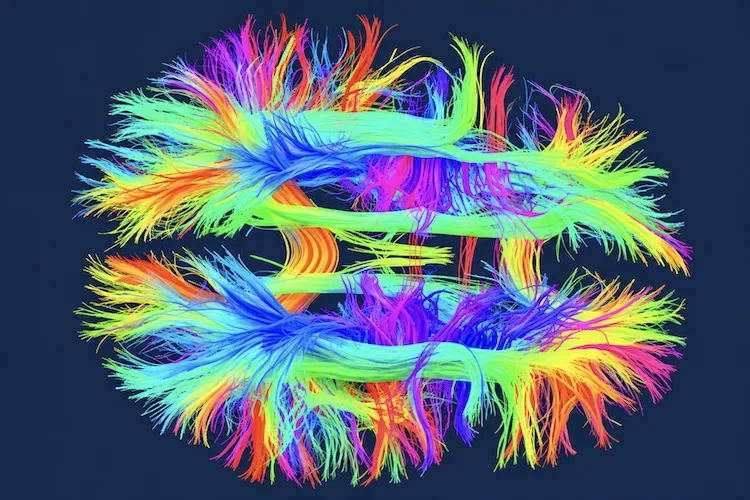
Stimulating one region.
Influencing a connected network.
What to expect?
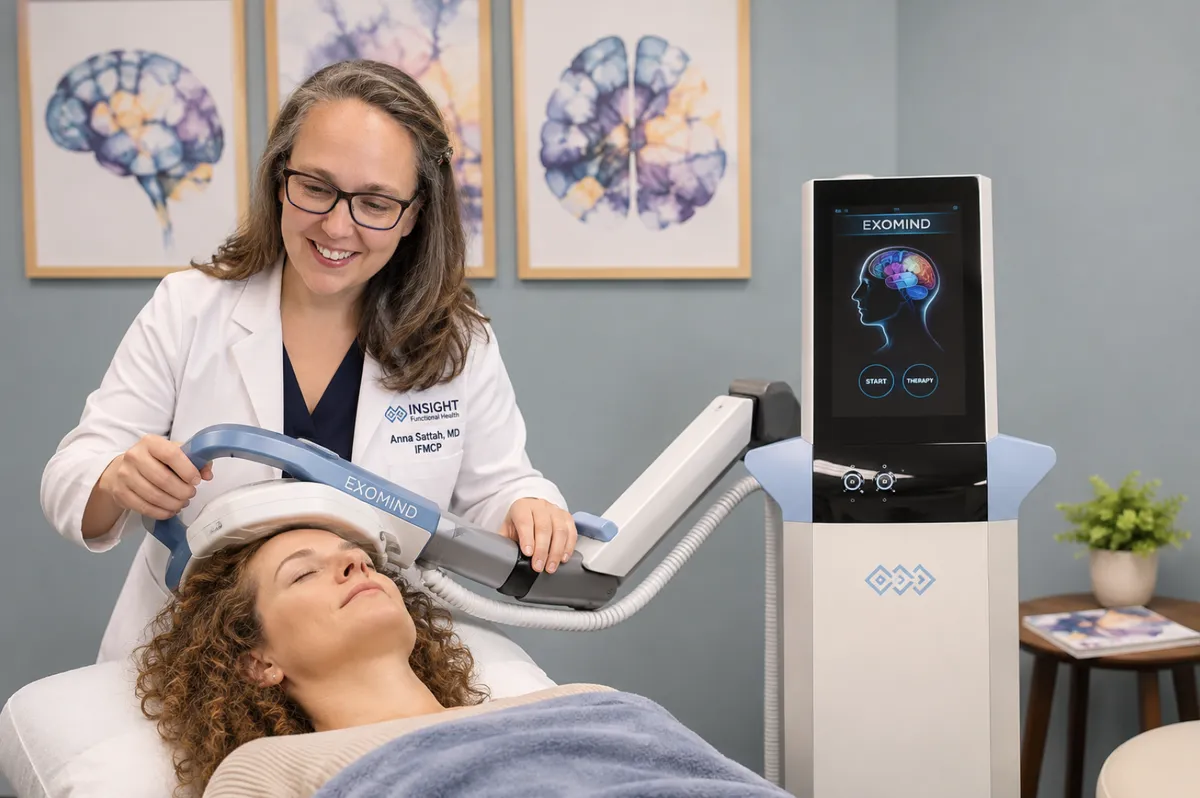
During an ExoMind session, you recline while a magnetic applicator is positioned near your head. Sessions typically last approximately 25 minutes. You may notice a tapping sensation. No anesthesia or surgical procedure is involved.
Headache and scalp discomfort are possible. Seizures are rare but serious, and screening for contraindications is essential.
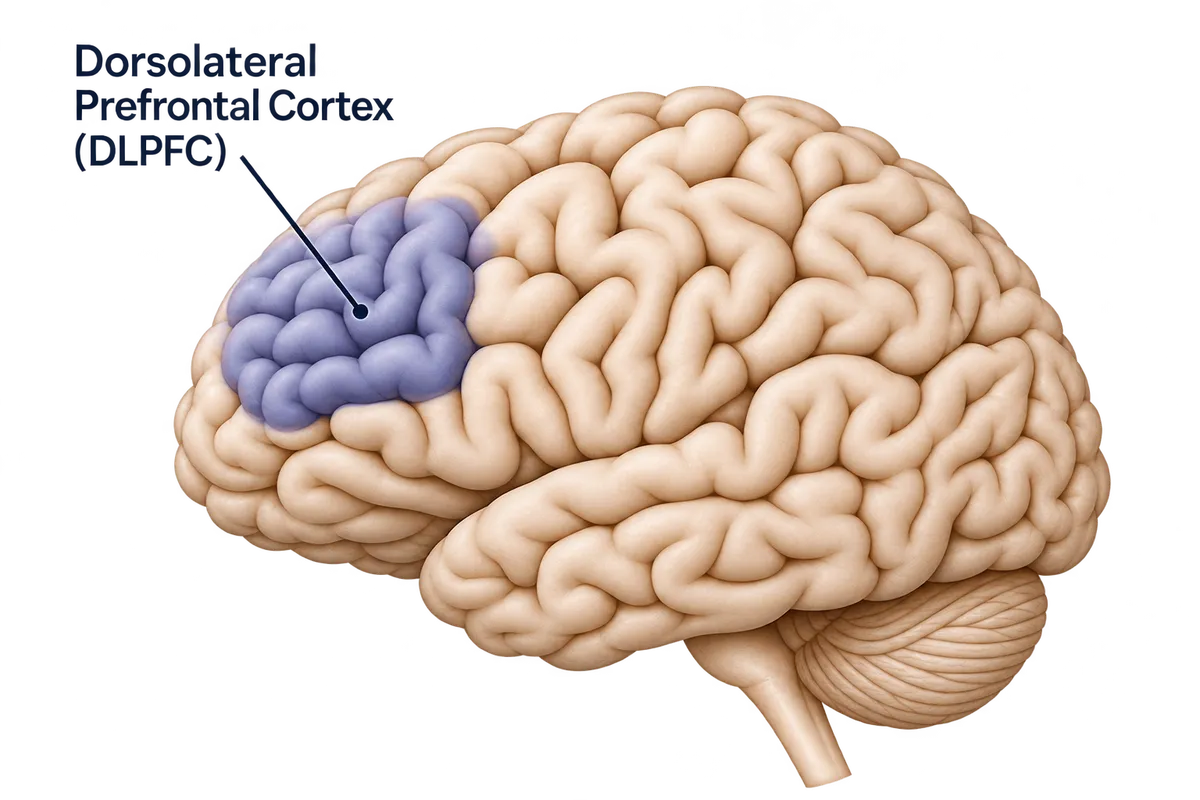
Where we stimulate?
The Dorsolateral Prefrontal Cortex
A Key Control Center
for the Brain
The dorsolateral prefrontal cortex (DLPFC) plays an importan role in coordinating how we think, plan , focus, and regulate our response.
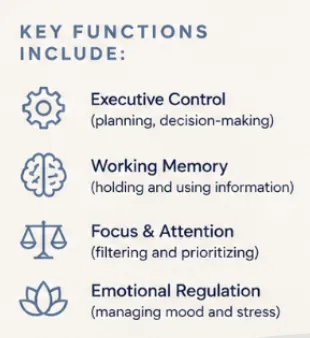
Different Challenges. Connected Brain Networks.
The prefrontal cortex is part of a larger, interconnected network, which helps explain why TMS is being studied across several areas of brain health.

Memory & Focus

Food Cravings

Motivation &
Self-Control

Stress & Mood
Watch the Physicians' Discussion
Helping the Brain Strengthen Its Connections
There's a well-known principle in neuroscience: "Neurons that fire together, wire together."
Every time nerve cells communicate and activate together, they have an opportunity to strengthen their connections. This is part of neuroplasticity; the brain's remarkable ability to adapt, learn, and reorganize itself.
TMS encourages targeted nerve cells to fire, which may help the brain strengthen communication within certain networks over time. Researchers are studying how repeated stimulation can support lasting changes in brain activity and function.
The goal isn't simply to stimulate one part of the brain. It's to influence how the larger network communicates and works together.
OUR APPROACH
Technology is most powerful when it's part of a thoughtful plan.
Brain health is influenced by sleep, matabolic health, nutrition, physical activity, inflammation, and many other factors.
At Insight Functional Health, we consider TMS within this broader context, rather than viewing it as a stand-alone solution.
A comprehensive approach helps the brain thrive.
Let's explore whether TMS makes sense for you.
A conversation with our team is the first step toward understanding the potential benefits, limitations, and appropriate options for your individual goals



Address
8403 Colesville Rd Ste 1100
Silver Spring, MD 20910